ICHEI Attends International Higher Education Summit in Chile and Delivers Thematic Presentation
On 14 May 2026, the UNESCO‑ICHEI delegation participated in the International Higher Education Summit titled "Collaborative Transformation: Towards New Horizons in University Teaching and Research" in Santiago, Chile. The event was jointly organized by RENIDES (Red Nacional de Investigación de la Docencia en Educación Superior) and Universidad Mayor, bringing together more than 300 university teachers, researchers, and experts from over 50 universities across Latin America and the Caribbean, alongside representatives from government agencies, international organizations, and the broader education and research community. Participants engaged in in‑depth discussions on innovation in higher education, university teaching research, AI in education, and the future development of universities.
During the opening session of the summit, Professor Patricio Manque, Rector of Universidad Mayor, delivered welcome remarks and introduced the university's recent achievements in higher education development, research advancement, teaching innovation, and internationalization, as one of the representative private universities in Chile. Professor Alberto Ramírez, President of the Mexican Educational Research Council, delivered a keynote speech examining the interaction between artificial intelligence and higher education, offering regional perspectives and academic insights into the evolving impact of AI on university teaching.
 | 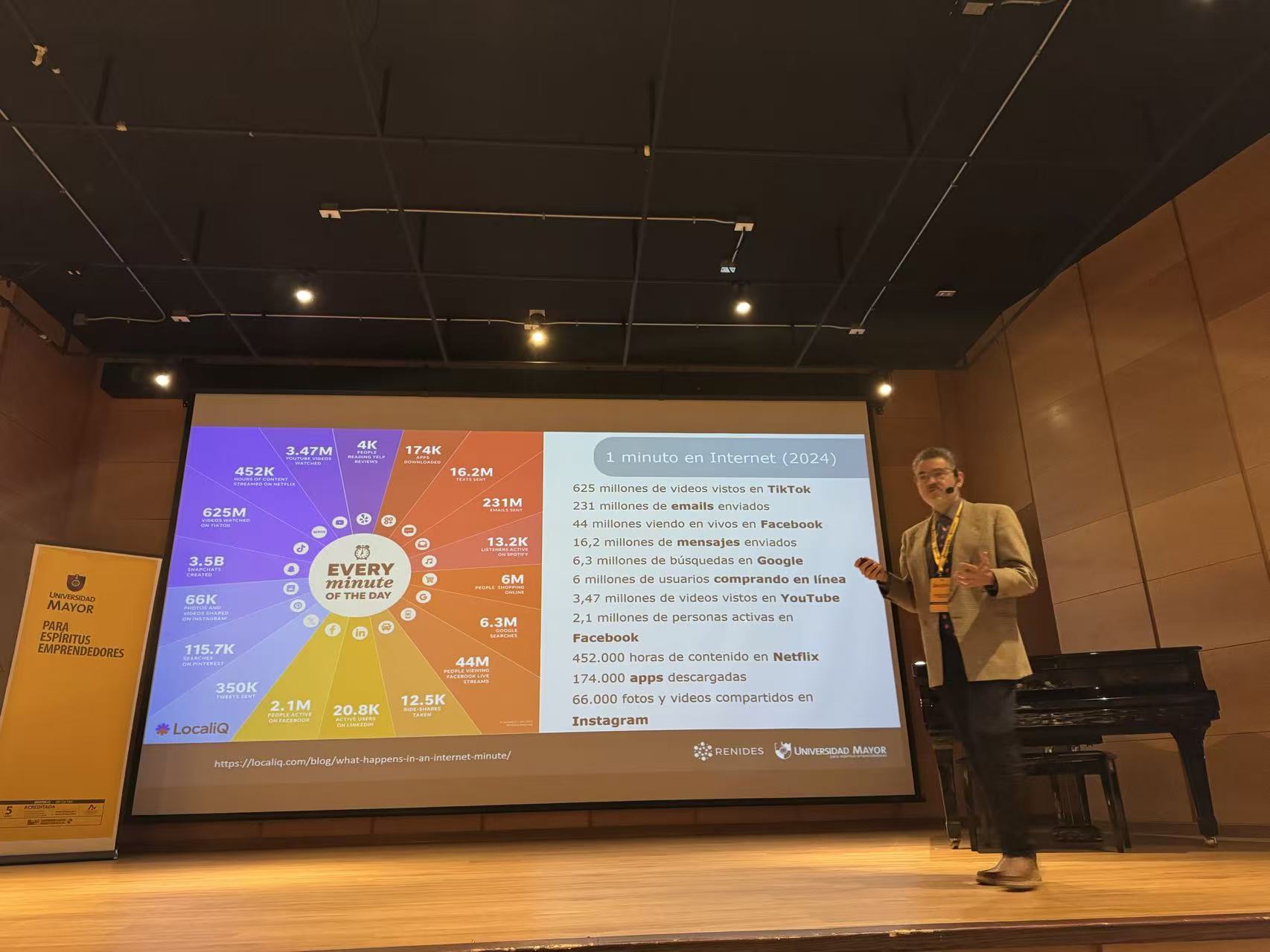 |
| Professor Patricio Manque, Rector of Universidad Mayor, delivered welcoming remarks | Professor Alberto Ramírez, President of the Mexican Educational Research Council, delivered a keynote speech |
In a parallel session, Mr. YANG Shangyi, Programme Officer of the Global Partnership and Programme Office (GPPO) of UNESCO‑ICHEI, delivered a thematic presentation titled "Dual Drivers of AI Empowerment and Technological Innovation: Future‑oriented Higher Education." The presentation introduced UNESCO‑ICHEI's mission, the development of the International Institute of Online Education (IIOE) global alliance and learning platform, the "AI + Industry" course portfolio, the IIOE Higher Education Workforce Digital Competency Framework, and UNESCO‑ICHEI's practical experience in advancing global higher education digital transformation through IIOE National Centres, Smart Classrooms, and open online courses. He emphasized that artificial intelligence is profoundly reshaping teaching approaches, curriculum systems, and talent development models. In response to the new wave of technological and industrial transformation, higher education institutions must strengthen teachers' digital competencies through open collaboration, capacity‑building, and technology‑enabled innovation; promote the sharing of high‑quality educational resources; and build a more open, inclusive, flexible, and future‑oriented higher education ecosystem.
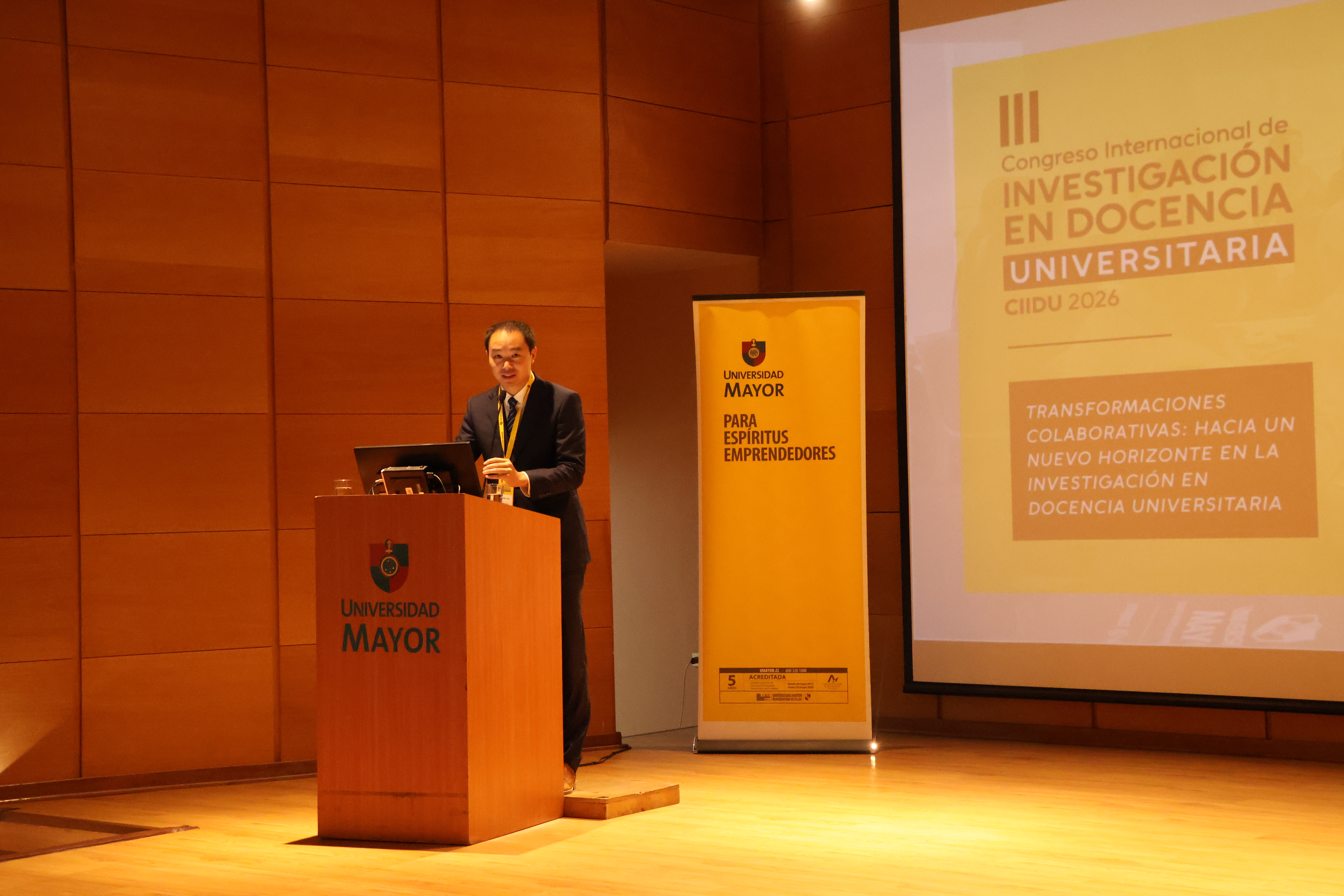
Mr. YANG Shangyi, Programme Officer of GPPO at UNESCO-ICHEI, delivered a thematic presentation
The presentation highlighted the multilateral cooperation model promoted by UNESCO-ICHEI in collaboration with partner universities, technology enterprises, and international organizations to advance the digital transformation of higher education. UNESCO‑ICHEI showcased cooperation with Chinese education technology enterprises—including MAXHUB and Guangzhou Dazzview Intelligent Technology Co., Ltd.—in areas such as smart classrooms, interactive teaching, and digital education solutions. It further introduced how UNESCO‑ICHEI and its enterprise partners have supported the establishment of smart classrooms in partner institutions across Asia and Africa, contributed to the development of IIOE National Centres, and fostered localized higher education partner networks.
During the Summit, the UNESCO‑ICHEI delegation held meetings with Professor Patricio Manque, Rector of Universidad Mayor; Cristian Celedón, Director of the Center for Educational Innovation at Universidad Mayor; and Professor Alberto Ramírez, President of the Mexican Educational Research Council, among others.
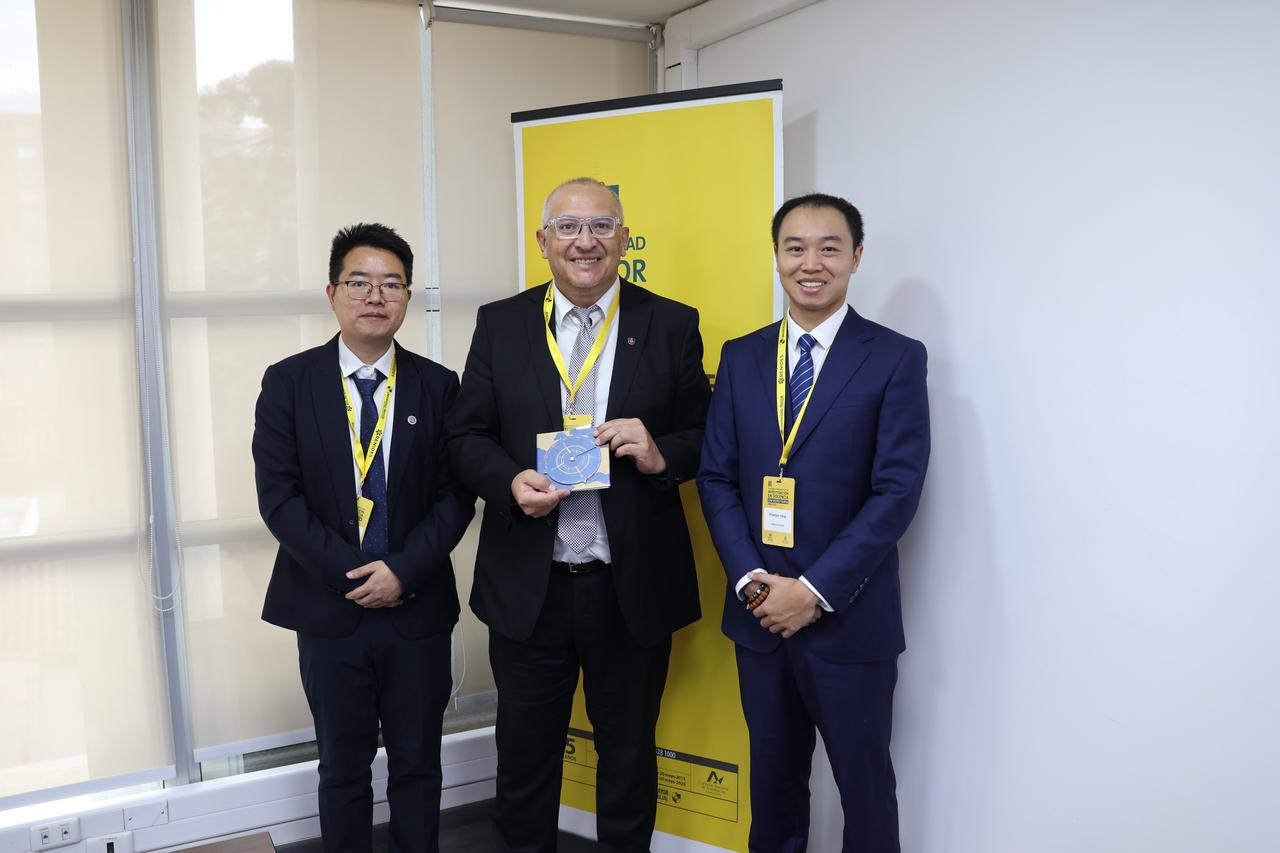
UNESCO-ICHEI delegation held a bilateral meeting with Professor Patricio Manque, Rector of Universidad Mayor
UNESCO‑ICHEI's participation in the International Higher Education Summit in Chile represents a significant step in deepening its engagement with Latin America and the Caribbean. Through this visit, UNESCO‑ICHEI enhanced its visibility in the region's higher education sector, expanded cooperation with Chilean education authorities, leading universities, regional higher education representatives, and education technology enterprises, and laid a solid foundation for future initiatives such as the implementation of the IIOE platform in Latin America and the Caribbean, Spanish‑language course co‑development, regional dialogues, and Smart Classroom demonstration projects.
Looking ahead, UNESCO‑ICHEI will continue to leverage its role as a UNESCO Category 2 Centre to strengthen cooperation with higher education institutions and partners in Chile and across Latin America and the Caribbean. With a focus on AI‑enabled higher education, digital and AI competency development and certification for teachers, open educational resource sharing, and the upgrading of smart education infrastructure, UNESCO‑ICHEI will work with regional partners to jointly promote a more open, inclusive, innovative, and sustainable future for higher education.
About Universidad Mayor
Founded in 1988, Universidad Mayor is one of Chile's leading private universities, with campuses in Santiago and Temuco. It has around 34,000 students, 55 undergraduate programmes, 111 postgraduate and continuing education programmes, 5 doctoral programmes, and 14 research centres, with over 41,000 alumni. The university is known for innovation, applied research and international cooperation, supported by more than 300 international agreements.
About RENIDES
RENIDES is Chile's national network for research on teaching in higher education, bringing together more than 20 to over 25 institutions across the country. It focuses on university teaching research, faculty development, pedagogical innovation and quality enhancement, while promoting collaboration with related networks in Latin America and Europe.